

Expect the change, all of it
Almost all of my couples change something, and it can happen anywhere from the second phone call to a month before the wedding. The reasons are endless and most of them are reasonable. A couple sees a look they like better. I deliver a proposal in all white and, seeing it, they realize the wedding needs color. They thought they had twenty thousand dollars, then the band or the DJ took more than planned, and now they have fifteen and need to know what comes out. A new trend appears that did not exist when they booked, and suddenly the flowers all their friends used are the flowers they no longer want. And nobody knows their final table count until the invitations come back.
Revision rounds are simply normal in this work.1 So the question is never how to avoid changes. It is how to make them cost almost nothing.
Make changes cheap to make
Here is why changes are dangerous. For years, redrawing a full event by hand, even in a general design program, could take multiple hours, which usually meant starting over.1 When a single revision costs that much labor, two things happen. You start to dread the conversation, and your margin quietly bleeds out in the rework.
There are many tools you can use and I've tried many of them. Recently, I helped create design software built specifically for Wedding Florists. The same full re-design now takes me about half an hour instead of a day. When changes are cheap to make, you can say yes graciously, keep the couple delighted, and stay profitable while you do it. That single shift changed my business more than any pricing formula ever did.
When a full re-design takes half an hour, a change is a conversation, not a crisis.
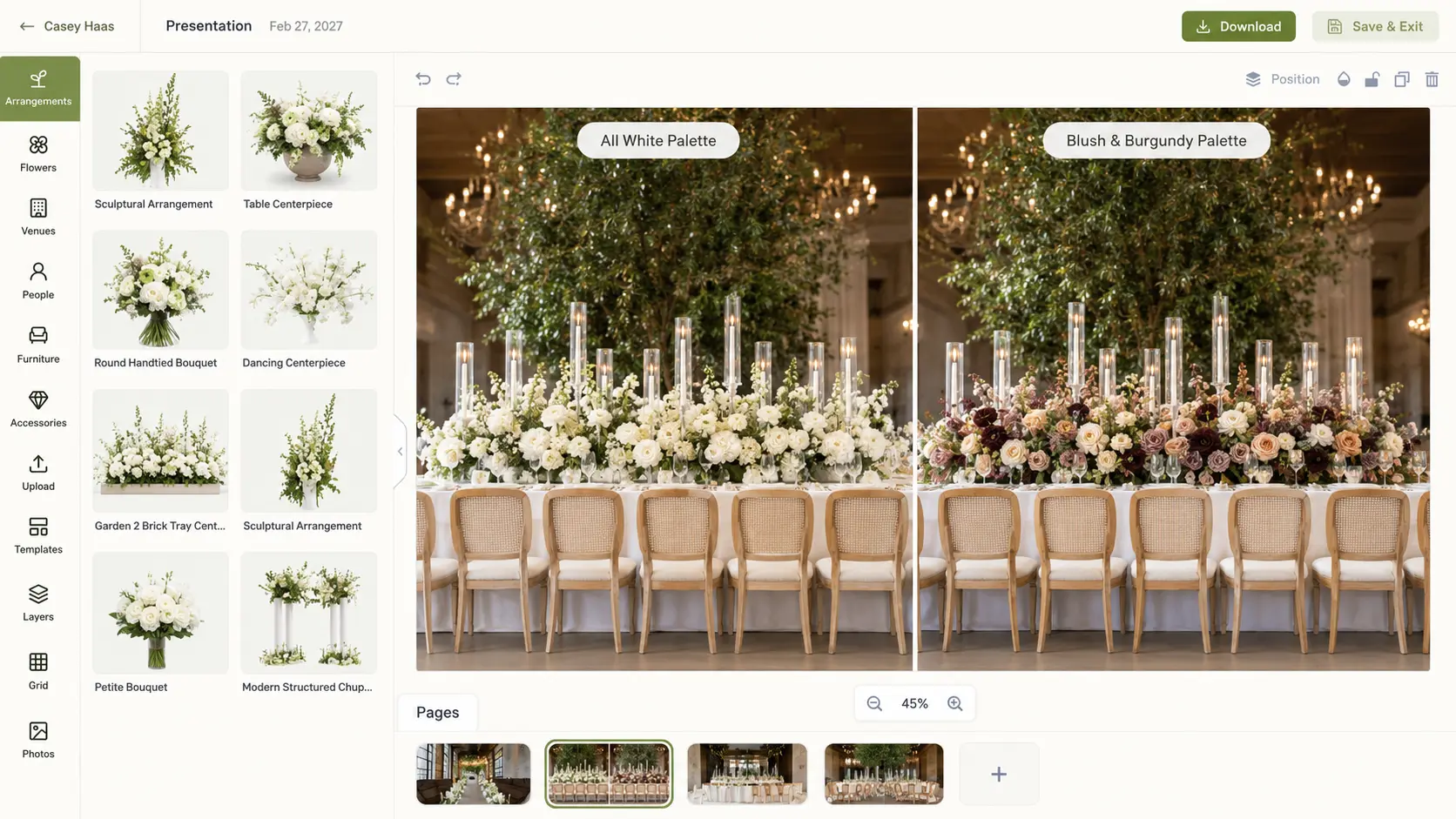
Protect the floor with a change clause
Flexibility needs a floor, and mine is simple. A couple can add as much as they like, but they cannot remove more than ten percent of the total budget. That is not only about my margin. It protects my ability to commit to my contractors with confidence and I'm never forced to pull work back from a crew at the last minute. Keeping a good reputation with the people I hire is important to me, and this clause protects that.
The ten percent floor lets me book my install and strike crew early and honor those commitments. Couples still get real freedom to refine, and my team gets reliable work. Everyone plans on solid ground.
Bring the cost down without cutting your margin
When a couple needs a smaller number, my principle is always the same. Lower their cost by removing cost I can replace with minimal impact, never by discounting my price. These are the levers I reach for, and most of them only work because the couple can see that nothing of value was lost. The dollar figures here are real examples from my own events, and yours will differ.
- Repurpose, and charge a flip fee. I move the ceremony flowers to the reception instead of buying them twice. A flip fee in the range of nine hundred dollars saves the couple the three thousand they would have spent on new arrangements, and I still profit on the flip.2
- Rebuild big structures in artificial. A lush arbor that runs ten to fifteen thousand dollars in fresh can be recreated in artificial flowers for a near-identical look. I can take five thousand off the couple's price while my own cost drops further, because I am using inventory I already own and topping it with only a little fresh, so my margin holds.
- Trade flowers for candlelight. I swap an extensive centerpiece for candles and a few bud vases. The couple's cost can fall by half, my cost falls further, and the profit I planned on stays intact.
- Swap expensive stems for less expensive look-alikes, and show it. Alstroemeria runs around two dollars a stem against six to eight for a rose, and carnations less still.3 Tell a couple to use carnations and they say no. But the software I design in lets me render those carnations shown on a full arch in seconds, and once they see it, they cannot tell the difference. Showing, not telling, is what unlocks the saving.
- Let the couple own the cheap labor. On a tighter budget, I suggest the couple buy and place their own candles. I keep my hands on the design and off their supplies, and they save on labor I was never the right person to charge for.
Show the cheaper stem on the actual arch, and the objection disappears.
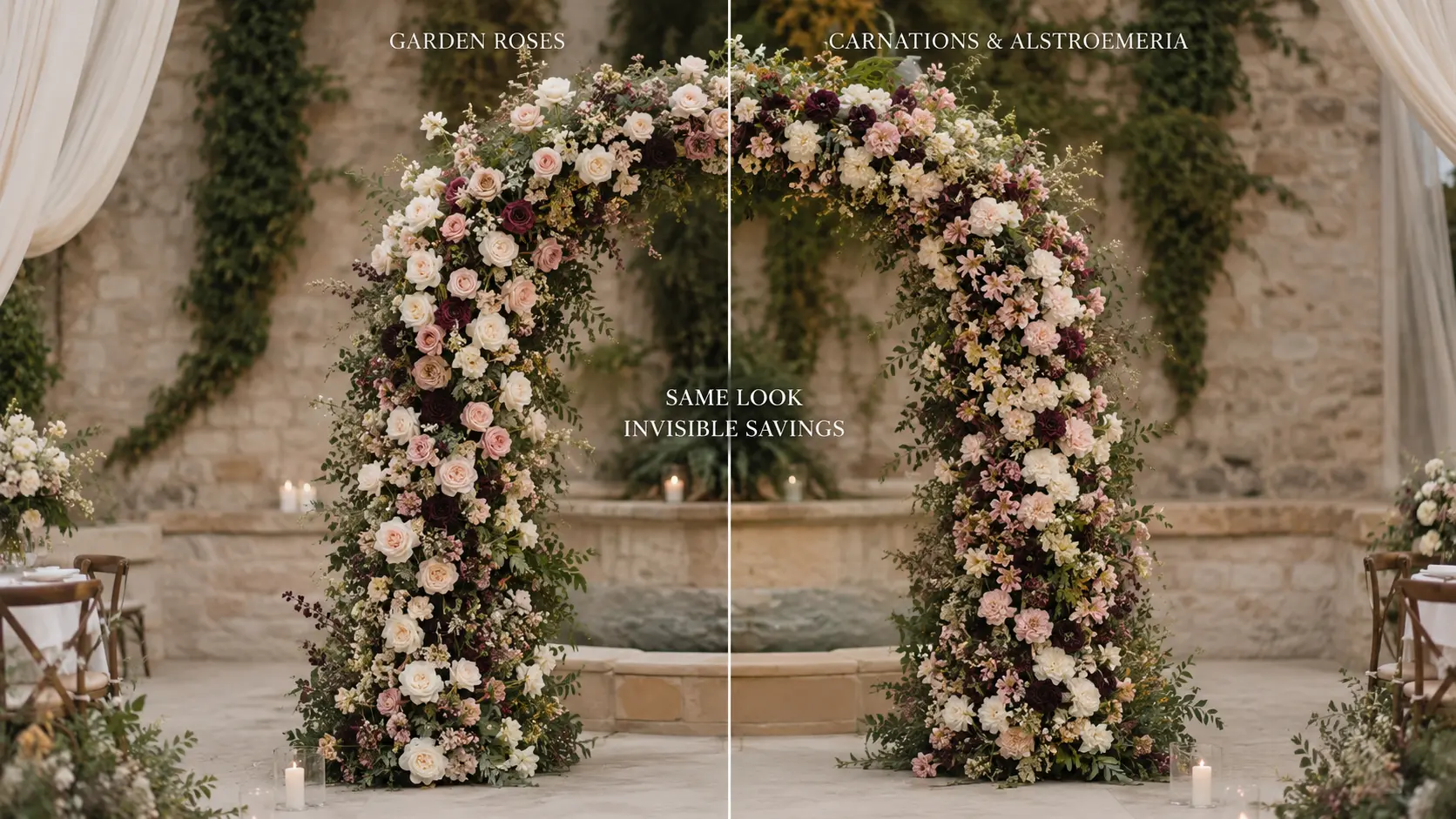
The move that pays for everything: show what they cannot imagine
Everything above brings a number down. The same skill brings it up, and that is where the real money is. There is an old sales line: put it on the mannequin, because when they see it, they buy it. In wedding florals, the mannequin is the couple's own venue photo.
So I include two or three large moments in the proposal that the couple never asked for. A flower-covered ceiling, a statement chandelier, a fully draped staircase, rendered right in their actual space. They see it and they say, how do I get that? Maybe they do not take all three, maybe they choose a smaller version, but seeing it creates a desire no verbal pitch can. This is a once-in-a-lifetime day, and people go after what they want when they can finally picture it.
The reason this is practical rather than aspirational is cost. In the design tool I use, an installation is close to a click. I drop in the palette, choose a ceiling treatment or a draped staircase, and set it right inside the couple's own venue photo. When showing an upsell costs me almost nothing, I can afford to show every couple the version of their wedding they did not know to dream about.
The upsell they never asked for, on an image of heir own venue.
Don't ask couples to imagine the change. Show them what's possible.
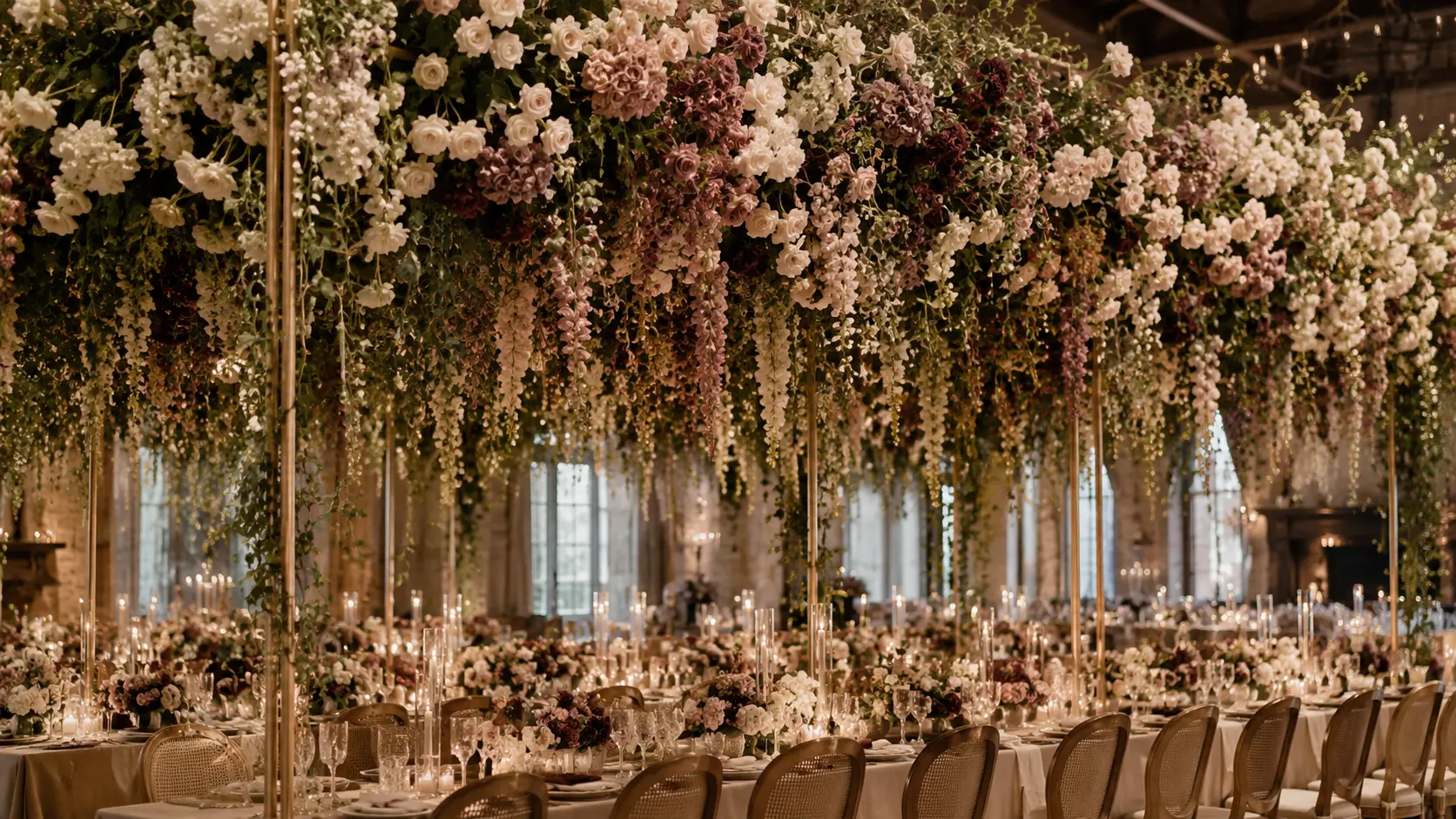
Why showing wins both directions
Notice that one capability does all of this work. The same exact, in-venue picture that cuts a budget, by proving a look-alike stem is indistinguishable, is the one that raises it, by revealing a wow moment the couple could not have pictured. The conversation shifts from price to possibilities. It only works because the rendering is exact and buildable. It is a true representation of what I will actually create, not a generic inspiration image.
Get the one-page version
I turned these six budget levers into a single cheat sheet you can keep by your bench and pull up in any consultation. Tell me where to send it.
Frequently asked questions
How many changes do wedding clients usually make to their flowers?
Nearly all of them. About ninety-nine percent of couples change something between the second call and a month before the wedding. They see a look they prefer, realize an all-white design needs color, shift budget after other vendors are paid, follow a new trend, or only learn their final table count once invitations return. Change is the job, not the exception.
How do I lower a wedding flower budget without losing money?
Lower the couple's cost by removing cost you can replace invisibly, not by discounting your price. Repurpose ceremony pieces at the reception for a flip fee, rebuild large structures in artificial flowers using inventory you own, trade extensive centerpieces for candlelight and bud vases, and swap expensive stems for look-alikes the couple cannot tell apart once they see them.
Should I let a couple reduce their floral budget after booking?
Yes, within a floor. A common approach lets couples add as much as they want but remove no more than ten percent of the total budget. That cap protects your ability to commit to day-of contractors confidently, without overstaffing into a loss or under-committing and burning a crew you want to keep.
How do I upsell wedding flowers?
Show the couple two or three large moments they did not ask for, rendered in their own venue. When a couple sees a flower-covered ceiling or a draped staircase in their actual space, they want it, even if they only take a smaller version. Seeing it creates the desire no verbal pitch can, and a visual installation is quick to produce, so the cost of showing an upsell is almost nothing.
References
- Curate. "Wedding Florist Pricing: The Math Behind Profitable Proposals" (revision rounds as normal; proposal and revision time as a hidden cost).curate.co
- TJ Flowers & Events. "How to Plan Wedding Flowers in NYC: A 12-Month Timeline" (repurposing economics; flip labor saves the cost of duplicate florals).tjflowersandevents.com
- Clearmargin. "How to Price Floral Arrangements and Event Flowers: A Complete Guide" (premium blooms carry a far higher per-stem cost than standard stems).clearmargin.app
